
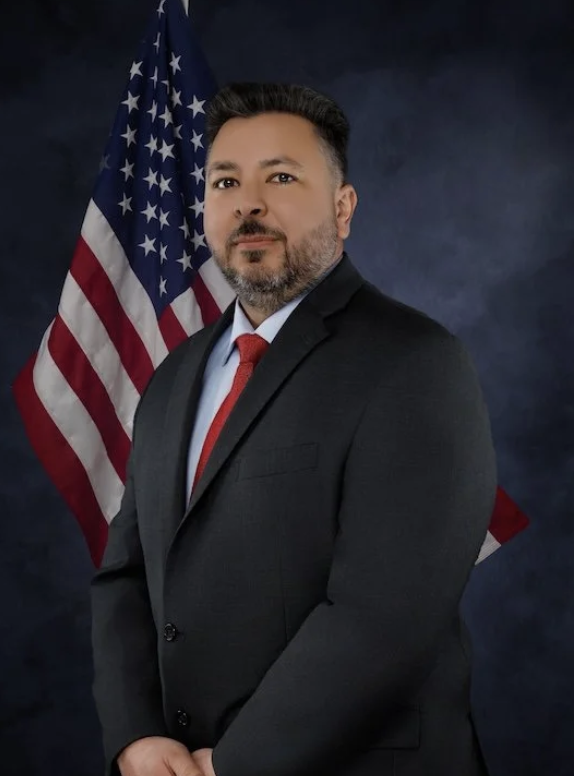
Meet John K. Buthorn
John K. Buthorn’s work is built on a career defined by performance in roles where responsibility carried real consequences—environments where decisions mattered, pressure was constant, and others depended on the outcome.
He began his service in 1998 in the United States Marine Corps, where he was introduced early to structured discipline, operational accountability, and the reality that performance must hold under pressure—not just for the individual, but for the system and the people relying on it. Assigned to the 6th Communications Battalion in supply administration and logistics, he learned that even behind-the-scenes roles carry weight when failure affects others.
In 1999, while continuing his service, he joined the NYPD Cadet Corps and attended John Jay College of Criminal Justice, moving deeper into environments where responsibility and consequence were inseparable. By 2001, he entered the NYPD Police Academy and served as Company Sergeant during the events of September 11th. In that moment, leadership and composure were no longer theoretical—they were required. Upon graduation, he was assigned to patrol in Staten Island, where daily decisions, situational awareness, and accountability directly impacted public safety.
In 2002–2003, his Marine unit was activated and deployed to Kuwait in support of Operation Iraqi Freedom. Serving as a Squad Leader on a Nuclear, Biological, and Chemical Decontamination Team, he operated in a high-risk, high-consequence environment requiring coordination, clarity, and disciplined execution under uncertainty. For his performance, he received a Meritorious Commendation—recognition not just of effort, but of effectiveness under pressure.
Returning to the NYPD, his career advanced through increasingly complex assignments. As a detective in narcotics, he conducted investigations where attention to detail and decision-making carried real consequences. As a media relations officer in the Office of the Deputy Commissioner of Public Information, he communicated critical information under public scrutiny, where clarity and judgment shaped trust. As an Investigative Sergeant in Internal Affairs Special Operations, he worked on cases involving organized crime and federal-level investigations, where precision and discretion were essential. He later served as Detective Squad Sergeant for the 122 Precinct, responsible for leading detectives and ensuring consistent performance across a team operating under pressure.
Throughout his career, he continued his academic development, earning a Master’s degree in Public Administration, strengthening his understanding of systems, leadership, and organizational responsibility.
After retiring from law enforcement, he entered a second career in social work, earning a Master’s degree in Social Work and becoming a Licensed Master Social Worker in New York State. He currently works with children and adults in a therapeutic setting. The pressure looks different, but the responsibility remains. Performance is less visible, but no less important—requiring consistency, emotional control, and the ability to remain steady while others are not.
In 2025, he ran for New York City Council, extending his commitment to service and leadership into the public arena, where responsibility expands beyond individuals to entire communities. More importantly, John's roles extend beyond professional settings and is currently married to his wife, Kristine, and has two daugthers as well as one son.
Across military service, law enforcement, clinical practice, and public leadership, one pattern has remained consistent:
Performance is not defined by effort alone. It is defined by the ability to remain clear, consistent, and effective when responsibility carries weight—and when others depend on it.
What began in law enforcement and military environments applies far beyond them. The same pressures, the same accumulation of responsibility, and the same breakdown in performance appear anywhere people are expected to carry multiple roles at once.
Center Fidelis was built from that experience—designed for those who are expected to perform under pressure in roles where others depend on them.